 English
 Français
INEPAS Social Aid Department
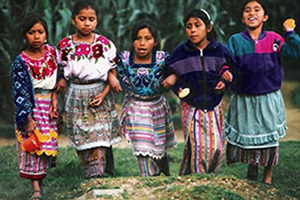 INEPAS is a non-profit organization, founded in 1994, legally constituted and fully recognized by the Guatemalan state for performing a range of social, legal, and humanitarian projects within the community development framework in the Quetzaltenango area. Since its founding, INEPAS has led various social and educational support efforts and projects in different communities.
Philosophy
Since its foundation in 1994, INEPAS has considered it very important to work with rather than for the Mayan communities of Quetzaltenango. As a social service institution, we have the philosophy that our primary role is to motivate, guide and educate them towards self-management. Communities do not simply receive and depend on our help: they use it to develop the capacity and knowledge to make their own decisions on ways in which to improve their situation.
In this way, INEPAS acts as a source of social support for people in need, rather than a source of financial help that only provides short-term aid. Our aim is to broaden the ambitions of individuals, families and communities in order to sustain the support we give for generations to come.
History and first projects
During its first years of operation, INEPAS promoted the establishment of four social and educational support projects in response to the levels of poverty and illiteracy of the served communities. The main axis of attention was constituted by disadvantaged children and young people who did not receive any attention from the State.
The first of the projects carried out by INEPAS was called the School Assistance Program, aimed at solving learning problems and low school performance, as well as giving attention to the psychological problems of boys and girls from various public schools in Quetzaltenango.
The second project was called the Training Program and consisted in giving educational talks at a public night school for young people. It was intended to provide guidance on various social problems such as drug addiction, HIV AIDS and clandestine emigration to the United States, etc. This project was carried out for two years, during which two orientation talks a week were given to a group of 50 young people and given by teachers and trained students from INEPAS who voluntarily carried out this work.
The third project carried out by the association consisted in the founding and administration of the INEPAS Mixed Rural Community School, in the Mayan-K'iché community of Choquiac, municipality of Cantel, Quetzaltenango, where community self-management was promoted, the necessary funds to pay teachers were obtained and support was provided for the purchase of land for the construction of the school building.
The success of the work carried out in the community of Choquiac, received the benefit of being considered by the United Nations Educational, Scientific and Cultural Organization -UNESCO- of Paris as an innovative educational project and model for other organizations that carry out similar projects. For this reason, this institution financed the production of a documentary video on the Choquiac School that has been translated into various languages and distributed to more than 156 countries.
Starting in October 1996, a fourth project began, which was developed at the Choquiac school itself with the mothers of many of the children to whom the class was taught. This project lasted almost two years, reporting important economic benefits to many families. The project consisted of recovering the local crafts of Mayan women, as an alternative for the families’ economic development and was called the Local Crafts Program. The objective was achieved through training workshops to develop skills in women that would allow them to take advantage of existing local resources.
The programs that were implemented in this second time were the following:
Warning: Invalid argument supplied for foreach() in /home/clients/6ad6c160a4ec33a7990c2432cafeb37b/sites/inepas.org/wp-content/plugins/responsive-accordion-and-collapse/front/ac-content.php on line 57
The need to innovate through a new creative lens and to think critically, always with the social participation of the communities, led INEPAS to consider of transcendental importance the creation of new work proposals, this time, based on the experience of more than 20 years.
To this end, starting in 2015, INEPAS integrated into its objectives the evaluation project of the work carried out since its founding in 1994. The evaluation process involved first the communities where INEPAS has collaborated (and is still collaborating), since they have represented live scenarios where the first revealing experiences began to be woven that shaped and transformed the work of the institution, thereby allowing it to be inserted into the understanding of the social, political and cultural reality of the country.
The evaluation project consisted of making a retrospection of the life of INEPAS, which involved remembering the entire route traveled since its founding, thinking about the motives, dreams, emotions and reasons that gave rise to the existence of the institution.
The two main questions that guided the evaluation process were:
- To what extent had the proposals, decisions, objectives and actions implemented since the founding of INEPAS, oriented at that time (1994) to the solution of specific problems - fundamentally in the indigenous Mayan communities, that, due to historical processes of exclusion and social marginalization established since the colony, had relegated them to a situation of inequality and economic poverty - managed to provide possibilities for economic, social, cultural and political development in the served communities?
- What actions should be undertaken to motivate communities to continue keeping the cultural heritage alive in their localities, and how to enhance individual and collective human development, so that the youth would access in better incorporation conditions into reaffirmation processes of the Mayan culture, and their corresponding identity?
The answers to these questions were based on several meetings and interviews with various personalities, civil and spiritual community leaders, guardians of ancestral wisdom, also committed to finding solutions to community needs, among them: elders, parents, teachers, young people (men and women) from various communities to know their opinions, concerns, interests, needs and proposals regarding the questions.
The interviews allowed us to trigger several reflections that range from the history of the most distant and recent past of these communities and their culture, to those sociocultural, economic and political aspects that, in light of the analysis of historical memory, reveal the different circumstances that the communities have had to live, and how, despite having suffered the rigors of the past, they have been able to safeguard and keep their history, their culture and the cultural elements that have allowed them to preserve their identity as a people.
Based on these reflections, it was considered necessary to design a work proposal that incorporates a series of actions that contribute to the creation of spaces for training, reflection and awareness, in order to promote the recognition of the Mayan cultural wealth, treasured since immemorial times in the heart of these people, which has been significantly affected from a philosophical, social, economic and cultural point of view, in almost all areas of life, in step with the changes brought about by the phenomenon of invasion, colonization, and right now, of globalization. The proposal responds to a creative and participatory approach, in which the protagonists assume their own development in accordance with their values, customs, methods and principles regulated by the cycles that regulate community life.
That is, at INEPAS, we share our absolute conviction to continue supporting communities in their social, educational and cultural initiatives, stripped of ego and intellect, theories, debates and political agendas.
The result of the evaluation and the actions to be undertaken in the short, medium and long term are specifically described in the document 'Historical review of INEPAS - Reseña histórica de INEPAS'. Available in Spanish.
Future actions of INEPAS
INEPAS wishes to encourage communities to recover historical memory, to record, document, strengthen and disseminate:
- the profound content of their philosophy of life,
- their different scientific contributions,
- their artistic wealth expressed in weaving or textile art,
- the practice of spirituality and the use of calendars rooted in the culture and its conception of the universe,
all this that comes from ancient times and that has been significantly affected, in step with the changes brought about by the phenomenon of invasion, colonization and now by globalization.
The recovery of ancient practices is urgent to continue caring for life, balance and community harmony and thus strengthen the future of next generations; and with this, to visualize the construction of a process of dissemination and of course contributing to the assumption of a new, more human and spiritual consciousness.
In that sense, at INEPAS we share our absolute conviction to continue supporting communities in their social, political, educational and cultural initiatives, based on practice, experience, wisdom and community knowledge; stripped of ego and intellect, of theories, debates and political agendas.
INEPAS has managed to promote innovative educational experiences through training in human, social and technical aspects to motivate boys, girls and young people to acquire formal education considering the importance of linking education and work, and thus reducing unemployment or underemployment and thereby stopping emigration to the United States of America.
Although many of our activities at first glance have not always been made visible through photographs or videos, the change and positive impact on the lives and hearts of the beneficiaries of INEPAS’ programs and projects have been enormous.
Of course, all this has been possible thanks to the constant effort and work of the communities and the selfless support of both the institutions with which all types of collaboration have been coordinated, as well as national and international specialists who have contributed their time and experience in various fields for the proper development of the institution’s social projects.
We recognize that the success of these 30 years of existence of INEPAS is the reflection of the esteem, responsibility, affection, energy and creativity given to the institution by all who have joined us to help. The volunteers, teachers and students of Spanish; host families, supporters, national and foreign practitioners, some of whom have become friends over time and part of the INEPAS family.
Currently, we work and contribute all our efforts to guarantee the economic stability and sustainability of the institution, which has been affected due to the political decisions made by the government to close all the country’s borders for more than two years due to the COVID-19 pandemic.
To this end, we invite all people who consider themselves to have a collaborative spirit to join our effort, your collaboration now more than ever is necessary to help us continue helping. We seek to change and impact the future of the children, young people and families of the communities where we work.
THANK YOU FOR HELPING US TO HELP
Our GoFundMe Campaign is Live!
